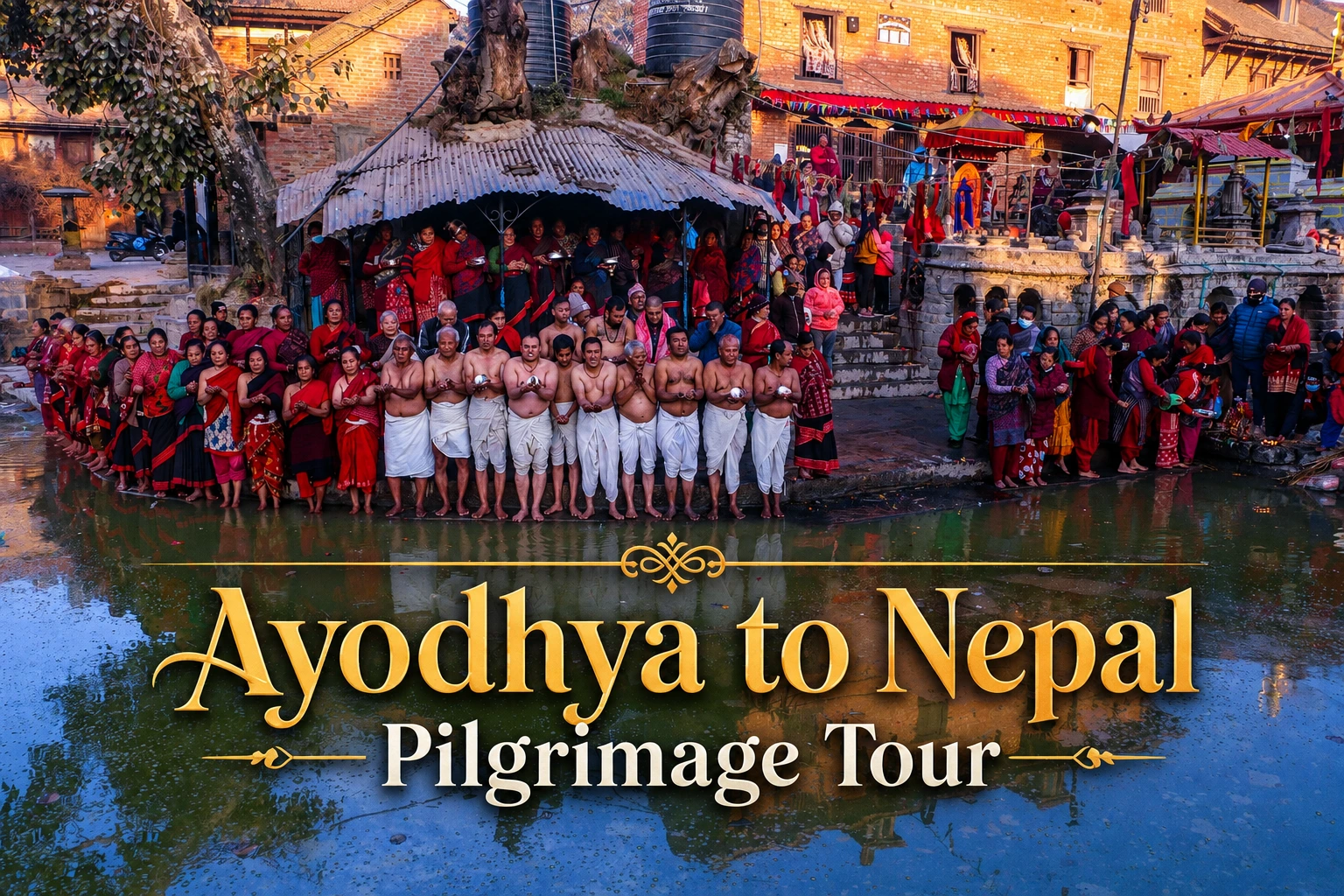
Ayodhya to Nepal Pilgrimage Tour
An Ayodhya to Nepal pilgrimage tour connects two regions with deep religious and cultural significance. Starting from Ayodhya, travellers can journey by road into Nepal and visit sacred destinations associated with Hindu and Buddhist traditions. Depending on the available time, the pilgrimage can include Janakpur, Kathmandu, Pashupatinath, Lumbini and Muktinath. Travellers looking for different travel durations can also explore the Ayodhya to Nepal tour package to choose a route that matches their pilgrimage priorities. From a short temple-focused journey to an extended religious circuit, the itinerary can be planned around the destinations, travel time and comfort of the group.
Spiritual Significance of the Journey
Ayodhya is traditionally associated with Lord Rama, while Janakpur is closely connected with Mata Sita. This makes the two destinations particularly meaningful for devotees interested in the Ramayana tradition. Continuing further into Nepal opens the opportunity to visit other important religious locations. Kathmandu is home to Pashupatinath, while Lumbini represents an important centre of Buddhist heritage. Muktinath offers a Himalayan pilgrimage experience and is revered by both Hindu and Buddhist communities. Rather than treating these locations as a single fixed route, travellers can select destinations according to their religious interests, available days and travel preferences.
Sacred Places to Visit
Janakpur and Janaki Mandir
Janakpur is one of the most important stops for pilgrims travelling from Ayodhya. The city is traditionally identified with the kingdom of King Janak and is closely associated with Sita. The Janaki Mandir is the principal attraction and an important place of worship. Visitors can also explore other temples and sacred ponds in the city. For an Ayodhya-based pilgrimage, Janakpur provides a natural connection to the Ramayana tradition before continuing towards other parts of Nepal.
Pashupatinath Temple
Pashupatinath is one of Nepal's most prominent Hindu pilgrimage sites. Located beside the Bagmati River in Kathmandu, the temple complex is dedicated to Lord Shiva. Pilgrims can spend time at the temple complex and explore the surrounding religious area. Because of its importance, Pashupatinath is often given dedicated time in a Kathmandu pilgrimage itinerary.
Muktinath
For travellers seeking a Himalayan pilgrimage, Muktinath can be added to an extended itinerary. Located in Mustang at approximately 3,800 metres, the destination requires considerably more travel time than Janakpur or Kathmandu. The journey should therefore be planned with appropriate rest and flexibility. Muktinath is respected by Hindu and Buddhist pilgrims, making it an important destination for travellers interested in Nepal's diverse spiritual heritage.
Lumbini
Lumbini is associated with the birth of Gautama Buddha and is an important Buddhist pilgrimage destination. The area includes religious monuments, monasteries and places connected with Buddhist heritage. It can be included in a longer itinerary for travellers who want to experience different spiritual traditions during their Nepal journey.
Ayodhya to Nepal Pilgrimage Tour Options
There is no single route that suits every pilgrimage traveller. The itinerary can be designed around the destinations that are most important to the group.
Janakpur and Kathmandu Pilgrimage
This is suitable for travellers looking for a relatively focused religious journey.
- Ramayana-related pilgrimage
- Janaki Mandir visit
- Pashupatinath darshan
- Shorter Nepal trips
Janakpur, Kathmandu and Lumbini Pilgrimage
Adding Lumbini creates a broader religious and cultural journey.
- Families
- Religious groups
- Hindu and Buddhist heritage exploration
- Travellers with additional time
Janakpur, Kathmandu and Muktinath Pilgrimage
This is better suited to travellers planning an extended pilgrimage.
- Devotees visiting Muktinath
- Longer Nepal journeys
- Himalayan pilgrimage experiences
The final route should be selected after considering road conditions, season, available days and the physical requirements of the travellers.
How to Plan the Pilgrimage
A pilgrimage is different from an ordinary holiday. The itinerary should leave enough time for worship, rest and unexpected changes in travel conditions.
When arranging your journey, consider:
- Number of days available
- Religious sites you want to visit
- Travel requirements of elderly family members
- Hotel location
- Vehicle size
- Road conditions
- Seasonal accessibility
- Border formalities
- Time required between destinations
For families travelling with senior citizens, avoiding an overly packed schedule can make the experience considerably easier.
Travelling by Private Cab
Travelling by private cab can be useful when a pilgrimage includes multiple destinations. The itinerary can be organised around the group's preferred departure times, sightseeing requirements and rest stops. Depending on the group size, suitable vehicle options may include a sedan, SUV or larger passenger vehicle.
A professionally planned journey may include:
- Private transportation
- Hotel accommodation
- Breakfast as per the selected plan
- Planned sightseeing
- Border assistance
- Driver support
- Toll and parking arrangements where applicable
Package inclusions vary, so travellers should check the details of their selected itinerary before booking.
Best Time for an Ayodhya to Nepal Pilgrimage Tour
The best travel period depends on the destinations included. Janakpur and Kathmandu can generally be incorporated into itineraries across different seasons, while a journey towards Muktinath requires more attention to mountain weather and road accessibility. Travelling around major religious festivals can provide a distinctive pilgrimage experience, but visitors should also expect larger crowds and higher demand for hotels and transportation. For mountain destinations, checking current road and weather conditions before departure is especially important.
Travel Documents and Border Formalities
Indian travellers should carry valid government-issued identification when travelling to Nepal and should verify the latest entry requirements before departure. If travelling in a private or commercial vehicle, the necessary Nepal vehicle documentation, insurance and border permissions should also be arranged according to the applicable rules. Preparing documents before reaching the border can help reduce unnecessary delays during the journey.
Who Is This Pilgrimage Tour Suitable For?
This type of journey can be suitable for:
- Families visiting religious destinations
- Couples interested in spiritual travel
- Senior citizens travelling with family
- Small pilgrimage groups
- Ramayana devotees
- Hindu temple travellers
- Travellers interested in Buddhist heritage
- Groups planning a longer religious circuit
The itinerary can be shortened or extended depending on the group's priorities.
Best Route for an Ayodhya to Nepal Pilgrimage Tour
The best route depends on the time available, the religious sites you want to visit and the type of experience you prefer. Instead of trying to cover every destination, travellers can choose a route that matches their priorities.
Ayodhya → Janakpur → Kathmandu
This route works well for travellers who want to focus on some of Nepal's most significant Hindu religious sites. Janakpur provides a connection with the Ramayana tradition and Sita, while Kathmandu allows time to visit Pashupatinath and other important temples.
Ayodhya → Janakpur → Kathmandu → Lumbini
This option adds Lumbini to the journey, making it suitable for travellers interested in both Hindu and Buddhist heritage. It provides a broader cultural experience while still keeping the main focus on religious destinations.
Ayodhya → Janakpur → Kathmandu → Muktinath
Travellers with more time can continue towards Muktinath for a Himalayan pilgrimage experience. Since the destination is located at a high altitude in Mustang, the journey requires additional travel time and a more flexible schedule.
Frequently Asked Questions
How many days are required for an Ayodhya to Nepal pilgrimage tour?
The duration depends on the destinations selected. A focused trip covering Janakpur and Kathmandu requires fewer days, while adding Lumbini or Muktinath requires a longer itinerary.
Why is Janakpur important for pilgrims?
Janakpur is traditionally associated with Sita and is home to the famous Janaki Mandir.
Can Muktinath be included in the pilgrimage?
Yes. Muktinath can be incorporated into an extended journey, but additional travel days are necessary because of its Himalayan location.
Is the tour suitable for senior citizens?
Yes, but the itinerary should be planned at a comfortable pace with appropriate rest periods. A private vehicle can provide greater flexibility for families travelling with elderly members.
Can Hindu and Buddhist pilgrimage sites be combined?
Yes. They can be combined in an itinerary connecting Ayodhya with major religious destinations in Nepal.
Ready to Plan Your Ayodhya to Nepal Pilgrimage?
Talk with our travel team for a customised route, suitable vehicle and comfortable pilgrimage plan.