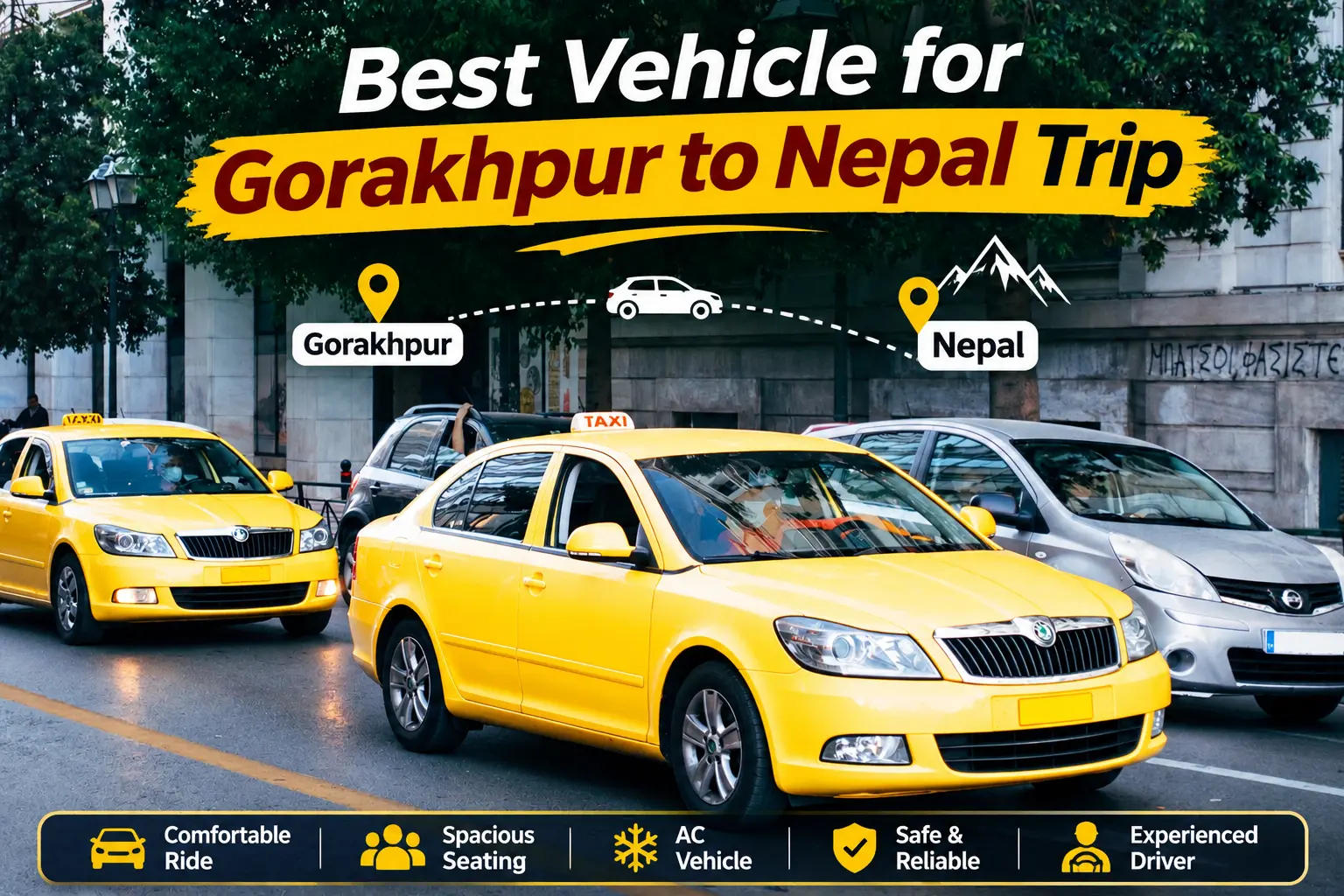
Best Vehicle for Gorakhpur to Nepal Trip
Planning a road trip from Gorakhpur to Nepal can be an exciting experience. From peaceful religious destinations and beautiful lakes to mountain landscapes and traditional cities, Nepal offers a variety of experiences for Indian travellers.
However, before starting the journey, one important decision deserves proper attention: choosing the right vehicle. Many travellers focus mainly on their destination, hotel and travel budget but do not spend enough time evaluating their transportation requirements. The vehicle you select can influence your comfort, luggage arrangements, travel schedule and overall road-trip experience. The best vehicle for a Gorakhpur to Nepal trip is not necessarily the biggest or most expensive one. It should match your travel route, passenger requirements, luggage, road conditions and personal comfort preferences. In this guide, we will explain the important factors to consider before selecting a vehicle for your Nepal journey, including seating comfort, luggage capacity, road suitability, safety features and practical travel preparations.
Understand Your Travel Requirements Before Choosing a Vehicle
Before comparing different vehicle categories, take a moment to understand what you actually need during your journey. A vehicle that works well for a short highway transfer may not provide the same comfort during several days of sightseeing and long-distance travel.
Start by considering the following points.
Number of passengers: Count all adults and children who will travel together. Remember that the driver is separate from the passenger seating capacity.
Travel duration: A journey involving multiple destinations requires more attention to seating comfort than a short transfer.
Luggage requirements: Families travelling with children or senior citizens may carry additional bags, medicines and personal belongings.
Travel destinations: Your transportation requirements may change depending on whether you are visiting lowland cities, popular tourist destinations or remote mountain areas.
Personal comfort: Some travellers prefer additional legroom, while others prioritise air conditioning, easy entry and exit or extra luggage space.
Making a simple travel checklist before contacting a vehicle provider can prevent misunderstandings and help you compare suitable options.
How Nepal's Road Conditions Can Influence Vehicle Selection
One of the most important aspects of planning a Nepal road trip is understanding that road conditions are not identical throughout the country.
The journey from Gorakhpur initially passes through the plains and the Sunauli border region. After entering Nepal, the driving environment can change depending on your selected destination.
Some roads are relatively straightforward, while others include hills, curves, narrow sections, construction areas and steep gradients.
A few important road conditions deserve attention.
Highway Driving and Long-Distance Comfort
Travelling for several hours can become tiring when passengers do not have enough legroom or proper seating support. For longer journeys, look for a vehicle with comfortable seats, adequate ventilation, functional air conditioning where required and enough space for everyone. A smooth suspension system and well-maintained tyres can also contribute to a more comfortable experience.
Hill Roads and Curved Mountain Sections
Certain Nepal routes involve continuous curves, elevation changes and uneven road surfaces. These conditions make vehicle condition and driver experience especially important.
Instead of selecting a vehicle simply because it looks powerful, check whether it is suitable for the exact route.
Important considerations include:
- Proper tyre condition and tread.
- Effective braking performance.
- Well-maintained suspension.
- Functional headlights and indicators.
- Suitable ground clearance for the planned route.
- A driver familiar with mountain-road driving.
Seasonal Road Conditions
Weather can influence road conditions significantly. During the monsoon, heavy rainfall may cause slippery surfaces, waterlogging, landslides and temporary road closures in some areas. Winter mornings may bring fog in lower regions, while higher destinations can experience cold temperatures and occasional snowfall. A suitable vehicle is important, but flexible travel planning and local road information are equally necessary.
Comparing Different Vehicle Categories for Nepal Travel
Different vehicle categories offer different advantages. Rather than assuming one category is suitable for every journey, understand the practical differences before making your selection.
Hatchback: A Practical Option for Simple Travel Needs
Hatchback cars are compact and generally easy to handle on ordinary city roads and highways.
They may suit travellers who prefer a simple transportation arrangement and do not require much luggage space. However, a compact vehicle can become uncomfortable when every seat is occupied and several large bags need to be carried.
Before considering a hatchback, check:
- Actual passenger seating capacity.
- Rear-seat legroom.
- Boot space with all passengers seated.
- Air conditioning performance.
- Suitability for the complete planned route.
A compact vehicle should only be selected when its capacity and route suitability have been confirmed.
Sedan: A Balanced Choice for Highway Comfort
Sedan cars are often considered by travellers who prefer a comfortable passenger cabin and a separate luggage compartment. They can provide a practical balance between road comfort and everyday travel convenience. A sedan may be suitable for a journey where passengers do not carry excessive luggage and the planned route is appropriate for that vehicle. However, not every sedan offers the same rear-seat space or boot capacity. Two vehicles belonging to the same category can feel quite different during long journeys. Check the rear seating position, available legroom, boot dimensions and vehicle condition before confirming your choice.
SUV: Useful for Space and Versatility
SUVs are popular among travellers who prefer a higher seating position, more cabin space and additional luggage flexibility. Depending on the model, an SUV may offer better ground clearance and a spacious passenger cabin. These features can be useful when travelling with family members or carrying multiple travel bags. However, the SUV category includes different vehicle sizes and capabilities. A compact SUV and a full-size SUV should not automatically be treated as equally suitable for every Nepal route.
Consider these factors:
- Ground clearance.
- Engine and braking condition.
- Seating comfort.
- Luggage capacity.
- Vehicle dimensions.
- Route-specific restrictions.
An SUV does not automatically make a difficult mountain route safe. Driver experience, road conditions and vehicle maintenance remain essential.
MUV and MPV: Focus on Passenger Convenience
Multi-utility vehicles and multi-purpose vehicles are designed with passenger space as an important consideration. Some models offer flexible seating arrangements, easy entry and exit, and a relatively spacious cabin. They can be useful for families who want to travel together without dividing themselves into multiple vehicles. Before booking, confirm whether the selected model offers enough space for both passengers and luggage. A vehicle may have sufficient seats but limited luggage capacity when all seats are occupied.
Tempo Traveller: An Option for Organised Group Travel
Tempo Travellers are commonly considered for extended families, friends and organised travel groups. Their larger seating arrangements can make group transportation more convenient. However, a larger vehicle also requires different planning. Road width, turning space, parking facilities, route restrictions and driver experience should all be checked. For a Nepal trip involving smaller hill roads or remote locations, confirm the suitability of the exact vehicle rather than assuming that every Tempo Traveller can reach every destination.
Passenger Comfort Matters More Than the Vehicle's Appearance
A vehicle may look attractive from outside but still be uncomfortable during a long road journey. Passenger comfort should be evaluated using practical factors rather than exterior appearance or brand reputation alone.
Seating Position and Legroom
Check whether passengers can sit comfortably without keeping their knees too close to the front seats. Rear-seat passengers should also have enough space to adjust their position during long journeys. This becomes particularly important when travelling with elderly family members or children.
Air Conditioning and Ventilation
Nepal travel may involve different temperatures depending on the destination and season. A properly functioning air conditioning system can make the journey more comfortable during warmer conditions. Check the ventilation system before departure and ask whether all passenger rows receive adequate airflow.
Suspension and Ride Quality
Road surfaces can vary between highways, city roads and mountain sections. A vehicle with properly maintained suspension can reduce discomfort caused by uneven surfaces. Ask about recent servicing and pay attention to unusual noises, vibrations or suspension problems during inspection.
Easy Entry and Exit
For families travelling with senior citizens, young children or passengers who have difficulty climbing into vehicles, door access and seat height deserve attention.
A vehicle with convenient entry and exit arrangements can make frequent sightseeing stops easier.
How to Check Luggage Space Before Starting Your Nepal Journey
Luggage planning is often overlooked when selecting transportation. A vehicle may have enough seats for everyone but may not have sufficient space for their bags. For example, a family travelling for five or six days may carry suitcases, backpacks, children's essentials and additional personal belongings. If the luggage area is insufficient, bags may occupy passenger seating space and reduce comfort.
Follow these simple luggage-planning tips:
Make a luggage list: Estimate the number and size of bags before requesting a vehicle.
Avoid unnecessary packing: Carry essential clothing, medicines and travel accessories instead of oversized suitcases.
Check boot capacity: Ask how much luggage can be carried while keeping all passenger seats available.
Consider group requirements: A family with children may need more space than a group of adults travelling with backpacks.
Confirm luggage arrangements: If you have unusually large bags, mention them before the vehicle is finalised.
Never assume that a vehicle's advertised passenger capacity automatically includes sufficient luggage space for a full group.
Important Vehicle Safety Checks Before Departure
Safety should be an essential part of every road-trip decision.
Before starting a journey from Gorakhpur towards Nepal, make sure that the vehicle is properly maintained and appropriate for the planned route.
Here are some important checks.
Tyres and Spare Wheel
Inspect tyre condition, visible damage and tread depth. Ask whether a usable spare wheel and basic changing equipment are available.
Tyres should be appropriate for the road conditions and maintained at the recommended pressure.
Braking System
The braking system should be in good working condition.
This is particularly important on routes involving slopes and frequent changes in elevation.
Any unusual noise, vibration or braking issue should be checked before departure.
Lights and Visibility
Headlights, brake lights, indicators, hazard lights and windscreen wipers should function properly.
Good visibility is important when driving during rainfall, fog or low-light conditions.
Seat Belts
Every passenger should have access to a properly functioning seat belt.
Confirm the availability of suitable seating and safety arrangements before booking.
Basic Emergency Equipment
Ask whether the vehicle carries basic emergency equipment, including a first-aid kit, warning triangle and suitable tools.
Keeping a charged mobile phone and emergency contact information is also helpful.
A responsible vehicle provider should be able to explain the vehicle's maintenance and safety arrangements clearly.
Why an Experienced Driver Is Important for Nepal Road Travel
Choosing a suitable vehicle is only one part of road-trip planning. The person driving it also plays a major role in the journey.
Nepal has a combination of highways, urban roads, hilly stretches and routes that may require additional local knowledge.
An experienced driver can help passengers manage the journey more comfortably by planning appropriate breaks, maintaining a suitable speed and understanding route conditions.
When discussing your travel arrangements, consider asking:
- Does the driver have experience with the planned Nepal route?
- Is the driver familiar with border procedures?
- Does the driver understand mountain-road driving?
- Are rest breaks included in the travel schedule?
- Who will coordinate if road conditions change?
- Is the driver authorised and appropriately documented for the service?
Avoid choosing a transportation provider solely because it offers a lower quotation. Reliable service, vehicle condition and route experience are important considerations.
Special Considerations for Families, Children and Senior Citizens
Different passengers have different travel requirements. A vehicle that is comfortable for young adults may not provide the same convenience to a family with small children or elderly members.
Travelling with Children
Families should consider adequate seating space, suitable child-restraint arrangements where required, easy access to drinking water and regular rest stops.
Avoid overcrowding the vehicle with luggage because children need sufficient seating space.
Travelling with Senior Citizens
Older passengers may prefer a vehicle with comfortable seats, easier entry and exit and sufficient legroom. A relaxed travel schedule with fewer unnecessary stops can also improve the experience. When planning longer drives, include suitable breaks for meals, refreshments and rest.
Travelling with a Mixed-Age Group
When children, adults and elderly passengers travel together, selecting a vehicle based on the comfort requirements of the most vulnerable passenger is often a sensible approach.
A little additional planning can prevent unnecessary discomfort during the journey.
Special Vehicle Requirements for Mountain Destinations
Not every Nepal destination can be reached using the same vehicle arrangement. Some tourist cities are connected through commonly used roads, while certain high-altitude destinations require more specialised transportation. Muktinath and the Mustang region are good examples where route-specific planning becomes particularly important. Depending on the season, road condition and destination, travellers may need a suitable 4WD vehicle or a locally arranged transport connection for particular sections.
Before finalising such a journey, confirm:
- The exact point where a vehicle change may be required.
- The availability of a suitable local vehicle.
- Road and weather conditions.
- Applicable route permits.
- Whether the selected vehicle is allowed to operate on the intended section.
Do not assume that a regular tourist cab can travel through every remote mountain road. For destinations involving high altitude or difficult terrain, route feasibility should be checked with local transport professionals before departure.
Questions to Ask Before Confirming a Nepal Travel Vehicle
Before finalising transportation, ask the service provider a few practical questions.
1. Is the quoted vehicle the same model that will be provided?
Ask for the vehicle category and, where possible, the exact model or an agreed equivalent.
2. Is the vehicle suitable for the complete route?
Share all destinations, including any remote or mountain locations, before confirmation.
3. Is there enough luggage space?
Mention the number and approximate size of your bags.
4. Are cross-border vehicle formalities arranged?
Confirm the required vehicle authorisation, permits, taxes and applicable documentation for the service.
5. What happens if the vehicle develops a problem?
Ask about breakdown assistance and replacement arrangements.
6. Are all charges explained in writing?
Clarify what is included and what may be charged separately.
7. Are local transportation arrangements required?
Some mountain destinations may involve a separate vehicle or local transfer.
Getting these details in writing helps avoid confusion during the trip.
Common Mistakes Travellers Should Avoid
Even a well-planned Nepal trip can become uncomfortable if transportation decisions are made without proper information.
Here are some common mistakes to avoid.
Selecting a vehicle only by price: A low quotation does not always mean good value. Compare vehicle condition, service quality and included facilities.
Ignoring luggage capacity: Passenger seating and luggage space should be considered separately.
Assuming every SUV is suitable for mountain roads: Vehicle suitability depends on the actual route and road conditions.
Overlooking driver experience: A familiar and responsible driver can make a significant difference on unfamiliar roads.
Not checking border formalities: Confirm the required paperwork for the vehicle and transportation service before departure.
Planning an unrealistic travel schedule: Long journeys should include enough time for border formalities, meals, traffic and rest breaks.
Not confirming the final vehicle: Make sure the selected vehicle category and agreed arrangements are mentioned in the booking confirmation.
Avoiding these mistakes can make the journey more organised and comfortable.
A Simple Checklist for Your Gorakhpur to Nepal Road Trip
Use this checklist before beginning your journey.
- Confirm the complete travel route and destinations.
- Count all passengers correctly.
- Estimate the total luggage.
- Check vehicle seating and comfort.
- Confirm vehicle condition and maintenance.
- Verify driver experience and authorisation.
- Check cross-border vehicle documents.
- Confirm route-specific vehicle requirements.
- Keep essential medicines and personal documents.
- Save the service provider's contact details.
- Keep some extra time for unexpected road delays.
These small preparations can help you avoid last-minute problems.
Plan Your Nepal Journey with Indo Nepal Safar
Selecting the right transportation is an important part of planning a comfortable Nepal road trip. However, travellers also need to coordinate pickup arrangements, border formalities, sightseeing schedules and accommodation. Indo Nepal Safar helps travellers plan journeys from Gorakhpur to different destinations in Nepal. Depending on the travel requirements, transportation and tour arrangements can be discussed according to group size, travel dates, route preferences and comfort expectations. Whether you are planning a family holiday, a couple's trip, a pilgrimage or a group journey, discuss your requirements before confirming the arrangements.
Before booking, share:
- Your preferred travel dates.
- Number of adults and children.
- Planned Nepal destinations.
- Approximate luggage requirements.
- Preferred vehicle category.
- Hotel and sightseeing preferences.
For more details about available travel arrangements, visit the Gorakhpur to Nepal Tour Package page. You can also contact the Indo Nepal Safar team to discuss a suitable travel plan and confirm the vehicle arrangements for your journey.
Frequently Asked Questions (FAQs)
1. Which vehicle should I choose for a Gorakhpur to Nepal road trip?
The right vehicle depends on your passenger count, luggage, travel duration and destinations. Compare seating comfort, luggage space, maintenance and route suitability before making a decision.
2. Is an SUV a good option for travelling to Nepal?
An SUV can be a practical option for travellers who need additional cabin space and luggage capacity. However, the suitability of a particular SUV depends on its specifications and the road conditions of the selected route.
3. Is a sedan comfortable for a long Nepal journey?
A well-maintained sedan can provide comfortable highway travel for a suitable number of passengers with moderate luggage. Check rear-seat legroom and boot capacity before booking.
4. Can families travel comfortably in a Tempo Traveller?
Yes, a suitable Tempo Traveller can be convenient for larger families and organised groups. Confirm the actual seating arrangement, luggage space, road access and vehicle condition.
5. Do I need a special vehicle for Muktinath?
Certain sections towards Muktinath and the Mustang region may require a separate suitable 4WD vehicle depending on local road conditions, permits and seasonal access. Confirm the current arrangement before departure.
6. What should I check before booking a Nepal travel vehicle?
Check vehicle condition, passenger seating, luggage capacity, driver experience, safety equipment, cross-border documentation and all applicable charges.
7. Is it important to have an experienced driver for Nepal travel?
Yes. An experienced driver familiar with the intended route can help manage hill roads, traffic, rest stops and changing road conditions more effectively.
8. How can I arrange a vehicle for a Nepal trip from Gorakhpur?
You can contact a travel service provider with your travel dates, group size, destinations and luggage requirements. Ask for written confirmation of the vehicle, route, inclusions and applicable charges.
Conclusion
Choosing the best vehicle for a Gorakhpur to Nepal trip requires more than comparing vehicle categories. Passenger comfort, luggage space, road conditions, driver experience and destination-specific requirements all deserve attention. A suitable vehicle should make the journey convenient without compromising passenger space or safety. Take time to compare your options, confirm the route and check the transportation arrangements before departure. With proper preparation and a realistic travel schedule, your road journey from Gorakhpur to Nepal can become a more comfortable and enjoyable part of the overall holiday. Plan according to your actual needs, and choose transportation that supports the kind of travel experience you want.